HOW IT WORKS
A ball in a socket
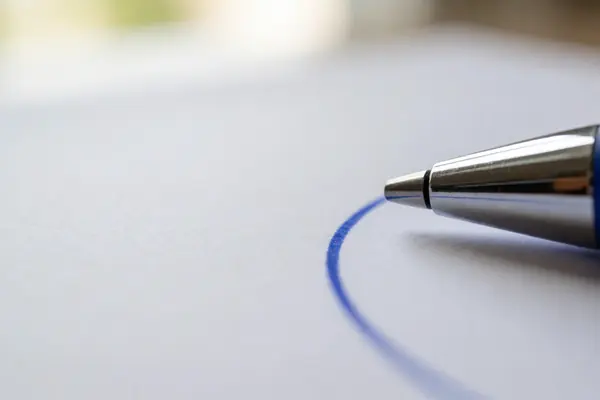
Illinois Institute of Technology researchers describe a small ball sitting in the tip: one side touches the ink, and as it rolls it carries ink round to the paper.
Try a surface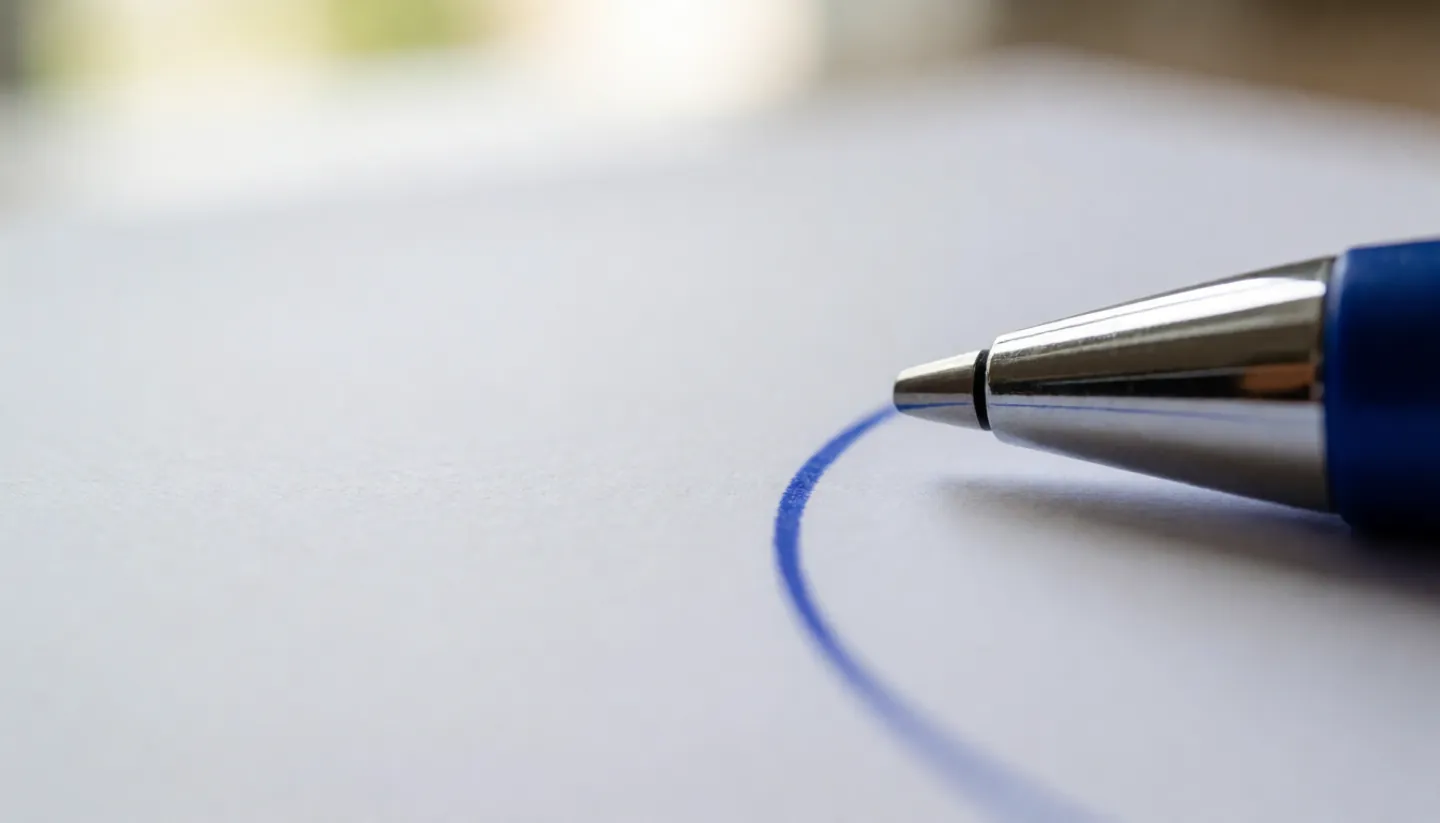
 doodlespen
HOW A BALLPOINT WORKS
≈ 1 mm ball in the tip
Inside the tip is a ball about a millimetre across.
As it rolls, one side picks up ink from the refill and the other side lays it on the page. That simple idea explains why ballpoints rarely leak, why they skip, and why one story about pens in space is a myth.
Updated
Try a surfaceTHE SHORT ANSWER
A ballpoint is a ball bearing that writes.
Its ink, its ball and the paper all have to work together.
HOW IT WORKS
Illinois Institute of Technology researchers describe a small ball sitting in the tip: one side touches the ink, and as it rolls it carries ink round to the paper.
Try a surfaceIN SPACE
The Smithsonian calls the story of a costly US space pen versus a Soviet pencil false: both sides used pencils at first, then bought pressurised pens.
The real storyKEEP IT WRITING
Many people throw away a whole pen when it stops working well. The IIT article notes the ink cartridge can be replaced instead.
Simple habitsA QUICK SURFACE CHECK
Pick a situation to see how an ordinary ballpoint copes. The bar shows how likely it is to skip or stop.
Based on a Princeton fluid mechanics course paper, an Illinois Institute of Technology research summary and the Smithsonian National Air and Space Museum.
TWO NUMBERS WORTH KNOWING
One figure for the pen tip,
one from the early days of spaceflight.
≈ 1 mm
Typical ballpoint ball diameter
At this size, capillary effects dominate, so the ink is pulled along mainly by surface forces rather than by gravity.
THE BALL · PRINCETON
$128.89
Cost of each early NASA mechanical pencil
NASA paid $4,382.50 for 34 mechanical pencils. Later it bought 400 pressurised pens at $6 each for the Apollo 7 mission.
SPACE PENCILS · SMITHSONIAN
The Smithsonian says the Soviet Union bought 100 pressurised pens and 1,000 ink cartridges for its Soyuz flights; before that its crews used grease pencils.
THREE HABITS FOR A HAPPIER PEN
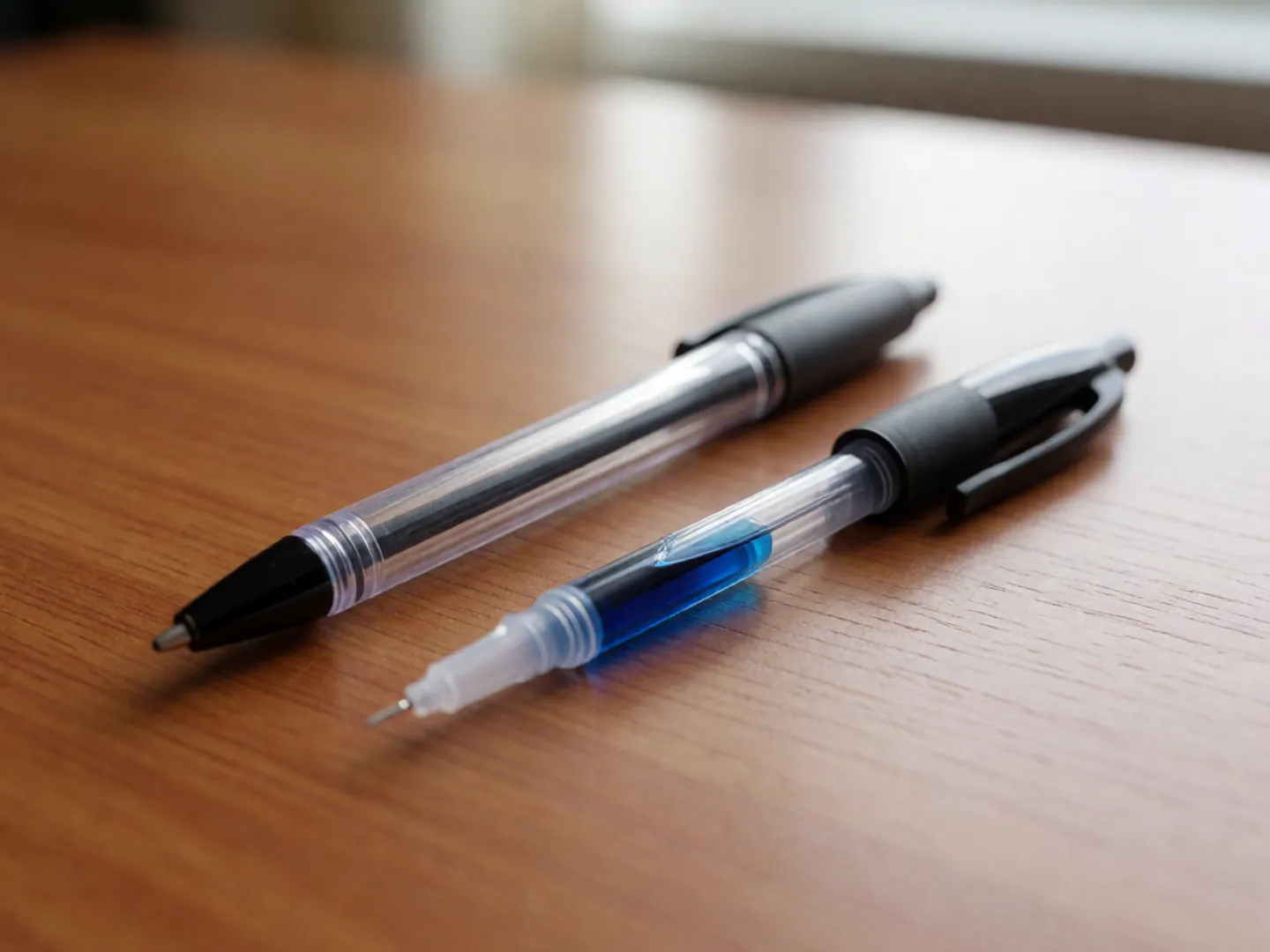
Each habit follows from how the pen works: the ball needs ink to coat it and a surface to grip.
Slick surfaces such as glass, many plastics and waxed paper give the ball too little grip to turn.
An ordinary ballpoint relies partly on gravity to keep ink at the ball, so long spells writing upside down make it fail.
If the barrel is fine, replacing the ink cartridge keeps the pen going and avoids throwing the whole thing away.
PENS IN SPACE
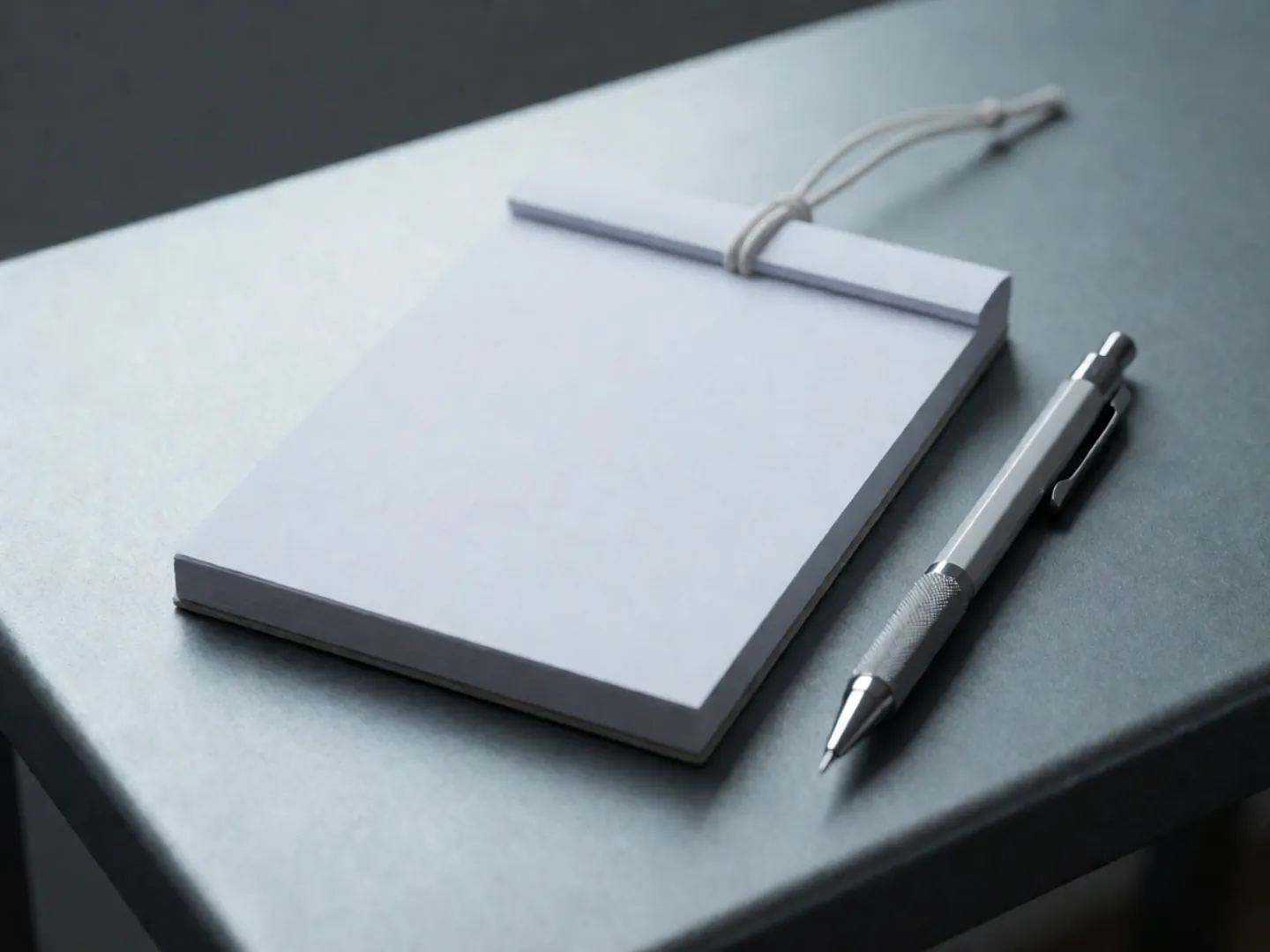
A popular story says the US spent billions on a space pen while Soviet crews simply used pencils. The Smithsonian's National Air and Space Museum says that is false: from Project Gemini, NASA used pencils tethered to the cabin wall, and Soviet crews used grease pencils.
Pressurised pens came from private development and were offered to NASA in 1965. Safety mattered: after the Apollo 1 fire, every item on board, even writing tools, had to be rethought so it would not feed a fire in a pure oxygen atmosphere.
Questions
A small ball sits in the tip. One side touches the ink in the refill and, as the ball rolls across the paper, it carries a thin film of ink round to the page.
Researchers at the Illinois Institute of Technology found skipping happens when the ink does not lubricate the ball completely. They suggest adjusting the ink's viscosity or the ball's material so it wets evenly.
Ink flow is driven mainly by capillary forces, but gravity is not negligible: an ordinary ballpoint begins to fail if used upside down for an extended time. Pressurised refills were designed to get round this.
The Science Museum Group credits László Bíró with inventing it in about 1931, with his brother helping to develop the thick ink. The first Biros were made in the UK by an aircraft company in about 1943.
No. The Smithsonian says the story is false. NASA used pencils at first, then bought 400 pressurised pens at $6 each for Apollo 7. The pen itself was developed privately.
Sources
ABOUT THIS NAME
doodlespen.com is part of the DoodleSale portfolio. It isn't in an auction right now, but you can ask about leasing it.